

Advanced neural machine translation
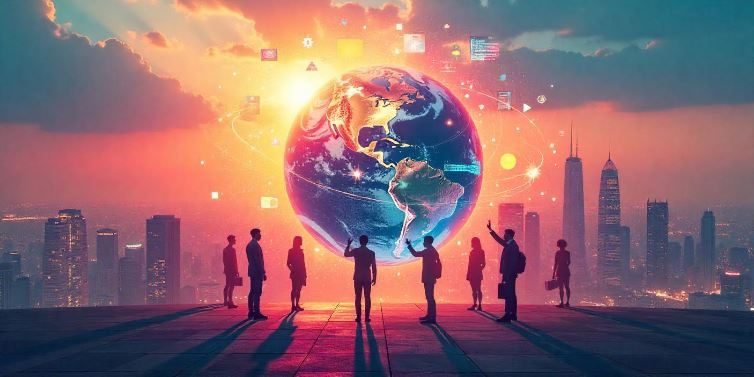
The world has become a ‘global village’, and communication between people who speak different languages is more important than ever. The translation industry plays a crucial role in this, connecting people, cultures and markets. With the rise of artificial intelligence, the translation industry has experienced a genuine revolution.
Advanced neural machine translation systems (NMT) have accelerated the translation process, improved the quality of translated texts and bridged language barriers worldwide.
What is neural machine translation? What are its main advantages and disadvantages? Will NMT replace human translators? These are the key topics we will discuss in this blog.
WHAT IS NMT AND HOW DOES IT WORK?
Early methods of machine translation (MT) were based on rules and statistical models and performed word-for-word substitutions. Such translations often resulted in poor and inaccurate translations with inappropriate context. Later, neural machine translation systems (NMT) emerged, based on artificial neural networks inspired by the structure of the human brain. Artificial neural network algorithms process data through layers of ‘neurons’, recognising patterns and making decisions.
These advanced systems can now understand context and cultural nuances to a certain extent, enabling more natural and accurate translations. Neural machine translation algorithms learn from vast amounts of data, with the quality and diversity of this data being crucial to the development of effective artificial intelligence models and therefore to achieving high-quality translations.
Diverse data, including different dialects, colloquial expressions and cultural contexts, helps AI systems to better understand linguistic subtleties, reduce errors and improve overall translation quality.
ADVANTAGES OF NEURAL MACHINE TRANSLATION
- EFFICIENCY: Manual translations are slow and time-consuming, whereas neural machine translation systems (NMT) can process large amounts of data in a short time. AI systems do not need breaks like humans, making the entire translation process considerably faster and more efficient.
- CONSISTENCY: Every human translator may interpret a text differently, whereas artificial intelligence algorithms follow precisely defined rules, ensuring consistent and predictable translations. Such consistency is particularly important for companies that require uniform communication across all language versions.
- ACCURACY: AI systems have access to large databases, dictionaries and translation memories, enabling them to deliver accurate translations, particularly in specialised fields such as technical, legal and medical texts. These systems continuously learn and increasingly understand linguistic subtleties and contexts, resulting in higher quality and more precise translations.
- COST SAVINGS: AI translation systems work much faster than humans and can translate many languages simultaneously, enabling significant time and cost savings by reducing the need for a large number of translators and accelerating the entire translation process.
AI systems still cannot fully understand context, cultural differences and linguistic phenomena that require deeper language knowledge.
LIMITATIONS OF AI IN TRANSLATION
- CONTEXT AND LANGUAGE UNDERSTANDING: AI systems still cannot fully understand context, cultural differences and linguistic phenomena that require deeper language knowledge, which is essential for adapting the style and tone of translations. In addition, AI systems often cannot incorporate emotions and a human tone into translations, causing the translation to lose meaning and sound robotic.
- COMPLEX CONTENT: Certain translations, such as medical and legal documents, require specialised knowledge that AI may not possess.
- BIAS: AI systems can learn from biased data, which can lead to misunderstandings, especially in sensitive and political contexts. To avoid misunderstandings and errors, it is important to carry out strict monitoring and data verification.
- LANGUAGE AND DIALECT LIMITATIONS: AI translation systems do not support all languages, and less common languages often lack adequate support. Different dialects and linguistic complexities pose additional challenges to translation accuracy.
HOW IS AI CHANGING THE TRANSLATION INDUSTRY?
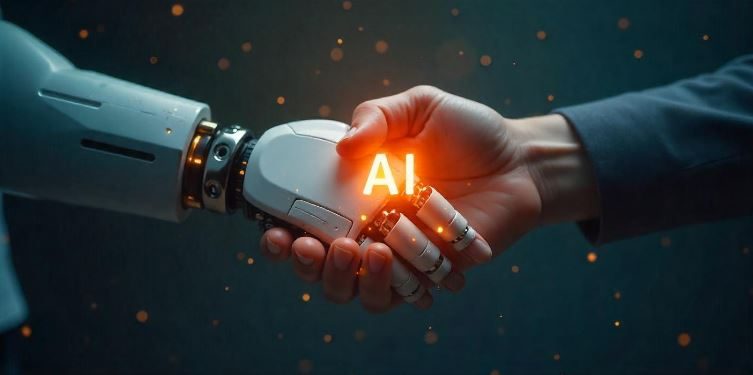
The main misconception is that artificial intelligence (AI) poses a threat to human translators. Rather than taking away their jobs, AI is changing their role in the translation process. Today, instead of carrying out basic translations, people are becoming proofreaders and editors, ensuring quality and accuracy after the AI has completed the translation. AI systems process large amounts of data quickly and accurately and take on repetitive tasks, enabling people to focus their skills on subtleties, creative expressions and content that requires a deep understanding of language.
Linguistic nuances, cultural context and creative aspects remain areas in which humans are superior to AI. This division of labour increases efficiency and the overall quality of translations.
However, in this rapidly evolving technological environment, translators must adapt their skills and develop new ones to remain competitive. Artificial intelligence will therefore not replace human translators, but will serve as a professional tool and assistant.
AI translation systems could develop to such an extent that it will be almost impossible to distinguish whether a text was translated by a human or a machine.
THE FUTURE OF AI TRANSLATION
Artificial intelligence will undoubtedly bring significant changes to the field of translation in the future. With access to new data and more advanced algorithms, AI-powered translation will be extended to less widely known languages, further helping to reduce language barriers worldwide.
AI models continuously learn, opening up the possibility that they will develop to the point where they overcome current shortcomings in emotional depth and deeper language understanding, making it almost impossible to determine whether a text was translated by a human or a machine.
Finally, one of the most significant achievements in the field of translation is real-time translation. This technology already enables high-quality speech translation and represents significant progress in supporting communication between people who speak different languages. This capability is particularly beneficial for international conferences, emergency services and other situations in which fast and accurate communication is crucial.
Furthermore, it may be possible in the future to translate and interpret non-verbal communication signals, which would further enrich the way we communicate and understand one another.
CONCLUSION
Neural machine translation (NMT) has developed considerably and already offers highly accurate, high-quality translations. Nevertheless, it lacks a deep understanding of context, human tone and emotions, making it incomparable to human translators. Although NMT will not replace human translators, it will undoubtedly bring changes to the translation industry and reshape the role of people in the translation process. Artificial intelligence has the potential to remove language barriers and make high-quality real-time translations accessible to everyone. AI tools provide extremely useful support in translation and their use should be encouraged.
However, it is important to view their results with a degree of scepticism and add a personal touch to every translation.
OWNVIA – YOUR TRANSLATION PARTNER
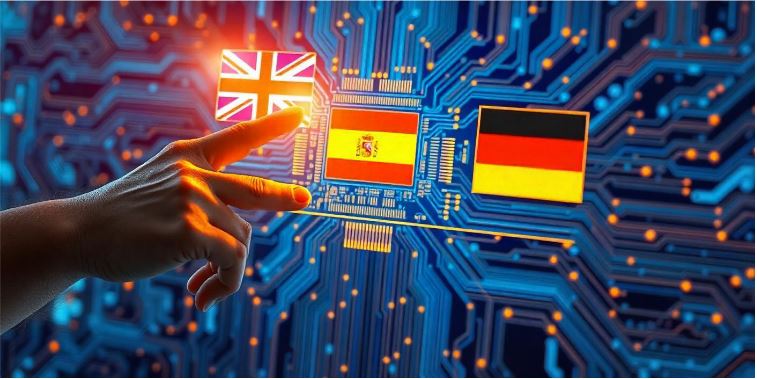
Your translation partner – ownvia is an innovative platform offering various AI tools. The translation tools from ownvia support translations into German, English, Spanish, French and Italian from all languages. In addition to standard translation services, ownvia offers advanced tools, the TranslationFitChecker and the TranslationRiskEvaluator. The TranslationFitChecker assesses the suitability of the text for human or machine translation, while the TranslationRiskEvaluator analyses the risk of automated translation and potential negative consequences.
Create your private micro-app in ownvia, which can translate into the language you choose, automatically detect the source language and use your own data for training to achieve optimal results. In addition, the platform enables personalisation with your own terminology databases and style guides, ensuring consistency and accuracy in translations. By using ownvia’s AI translation tools, your data remains protected and confidential, and you receive accurate and reliable translations.
Harness the power of our AI translation tools and improve your work! Sign up now and discover how you can translate texts quickly and accurately.